糟zāo
to spoil, go bad. 17 strokes, radical 米, first met in HSK 5.
What 糟 is made of
米 (mǐ, rice) and 曹 (cáo, ministers).
米 carries the meaning — grain — and 曹 carries the sound.
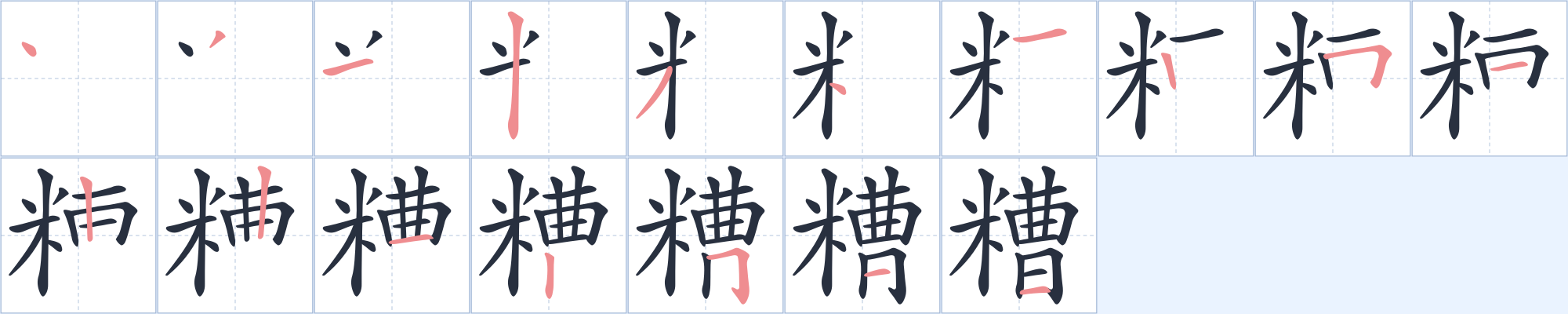
How to write 糟
Strokes 1–6 write 米, then strokes 7–17 write 曹.
Free, with no account: the app draws each stroke, then you write it and it says which stroke went wrong.
Print a 米字格 practice sheet for 糟
Words that use 糟
| 糟 | to spoil, go bad 指情况变得很差、不理想 早期排查作物病虫害,避免了糟糕局面。The farmland was never going to go spoiled. Lesson 521, 春华秋实 · 笃行安澜与同舟共济 · Steadfast Peace & Standing Together in Adversity |
| 糟糕 | terrible, awful (of a situation) 指事情发展得很不好的状态 避免了糟糕局面,农田绝不至于变糟。Experts steered the crops away from a terrible outcome. Lesson 521, 春华秋实 · 笃行安澜与同舟共济 · Steadfast Peace & Standing Together in Adversity |
Characters that share the sound part 曹
Written with the same phonetic, so their readings tend to rhyme with each other.
More characters with the radical 米
All 10 of them, and what the radical means, on the 米 radical page.