跟gēn
heel; to accompany, to follow; with. 13 strokes, radical 足, first met in HSK 5.
What 跟 is made of
足 (zú, foot) and 艮 (gěn, blunt).
足 carries the meaning — foot — and 艮 carries the sound.
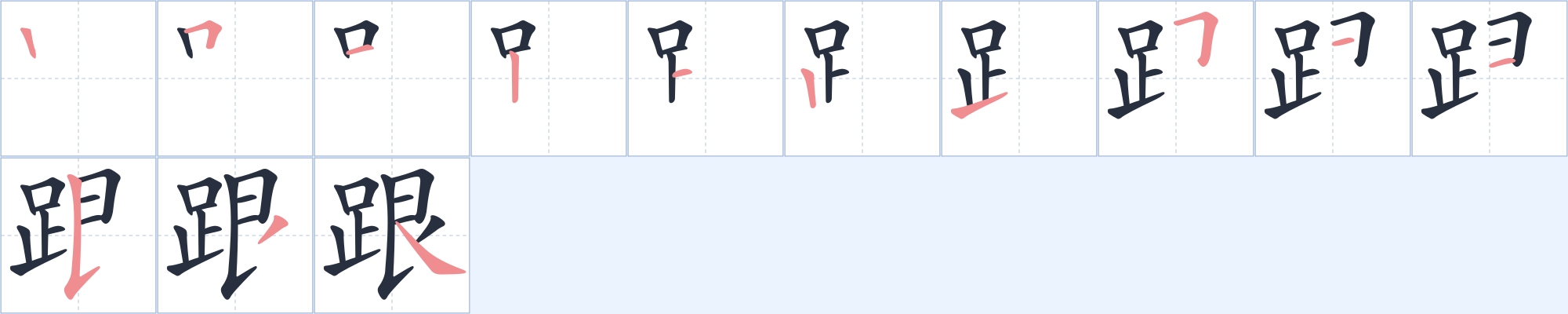
How to write 跟
Strokes 1–7 write 足, then strokes 8–13 write 艮.
Free, with no account: the app draws each stroke, then you write it and it says which stroke went wrong.
Print a 米字格 practice sheet for 跟
Words that use 跟
| 跟前 | in front of, nearby (someone) 指某人身边、面前很近的地方 年轻人快步走到老人跟前问好。The young man walked quickly up to the old man to greet him. Lesson 424, 邻里亲和 · 鼎新革故与工巧天成 · Systemic Renewal & Masterly Craftsmanship |
| 跟随 | to follow 指紧紧跟着某人或某事物一起行动 学徒跟随工匠大师研习非遗工艺。The apprentice followed the master craftsman to study the heritage craft. Lesson 425, 工艺推新 · 鼎新革故与工巧天成 · Systemic Renewal & Masterly Craftsmanship |
| 高跟鞋 | high heels 指鞋跟高高翘起的女式鞋子 嘉宾换下高跟鞋轻松赏乐。The guest kicked off her high heels to enjoy the music comfortably. Lesson 423, 崇墉雅韵 · 鼎新革故与工巧天成 · Systemic Renewal & Masterly Craftsmanship |
Characters that share the sound part 艮
Written with the same phonetic, so their readings tend to rhyme with each other.
More characters with the radical 足
All 16 of them, and what the radical means, on the 足 radical page.